Nicotine strength in mg and percentage explained
Nicotine strength is printed on every bottle sold in Britain, and it is printed in two different ways depending on who made it. One shelf shows milligrams per millilitre, the next shows a percentage, and shoppers reasonably assume the two describe different things. They do not. This guide explains what each label measures, how to move between them, what British law caps them at, and where salts and freebase genuinely differ. It does not recommend a level, and it should not be read as doing so.
What nicotine strength actually measures
The mg per ml figure is a concentration. It states how many milligrams of nicotine sit in each millilitre of liquid, so a 10 ml bottle marked 10 mg per ml contains 100 mg of nicotine in total.
The percentage figure measures exactly the same thing, expressed as a proportion by volume rather than as a weight per unit. Manufacturers choose one convention or the other largely for historical reasons, and some print both on the same label.
Nothing about the two notations implies a different product, a different chemistry or a different effect. A bottle labelled 1.8 percent and a bottle labelled 18 mg per ml carry the same concentration, and any listing suggesting otherwise has confused units for categories.
Converting nicotine strength between the two labels
One rule covers every case. One percent equals ten milligrams per millilitre, so you divide the mg figure by ten to reach the percentage and multiply the percentage by ten to reach the mg figure.
In practice that gives a short table you can hold in your head. Zero point three percent is three milligrams per millilitre, one percent is ten, one point eight percent is eighteen, and two percent is twenty. There is no rounding and no exception.
That last equivalence is the one worth memorising, because two percent is the British legal ceiling. Any nicotine containing liquid offered above it is not lawful to sell here, whatever the packaging claims and wherever the site is hosted.
The British caps that frame every label
Three limits govern nicotine containing e-liquid in the United Kingdom, and they explain most of what you see on a shelf. Strength is capped at 20 mg per ml. Bottles of nicotine containing liquid are capped at 10 ml. Refillable tanks and pods are capped at 2 ml.
Every product must also be listed with the medicines regulator before a retailer can lawfully sell it. That register is public, and it is the fastest way to check whether an unfamiliar bottle belongs on a British shelf at all.
Those caps mean the range of nicotine strength available here is narrower than the range you will read about on international sites. Content written for markets with higher ceilings or larger bottles is describing products that cannot legally be sold to you, and following its arithmetic will simply mislead you.
Shortfills, nic shots and the zero nicotine exception
The 10 ml bottle cap and the 20 mg ceiling apply to liquid containing nicotine. A shortfill contains none, so in law it is not a refill container, and neither limit reaches it. That is why 100 ml bottles sit legally alongside 10 ml ones.
A nic shot is the other half of the arrangement. It does contain nicotine, so it must respect both caps, and you add it to the shortfill yourself after purchase. The result is a larger bottle at a concentration determined by how much you added to how much base.
Two points catch people out. The 2 ml tank limit applies to the device whatever you put in it, zero nicotine included, because the law defines the hardware by what it can do. And from late 2026 zero nicotine liquid is inside both the new duty and the widened age of sale rules, as set out in our round up of vaping changes in 2026.
Salts and freebase at the same nicotine strength
Nicotine salts and freebase nicotine are two chemical presentations of the same substance, and the difference is in how the liquid behaves rather than in what the label says. At an identical concentration, salts are generally perceived as smoother in the throat, which is why they became the default in compact pods.
Freebase is the older presentation and carries a more pronounced throat sensation at the same figure. That characteristic is precisely why it tends to appear in liquids designed for higher vapour setups, where the sensation is diluted across a much larger volume of air.
The hardware is therefore part of the equation. A tight draw concentrates vapour in a small volume, an open draw disperses it, and the same bottle will feel entirely different across the two. Our comparison of MTL or DTL vaping sets out that difference in detail, and our guide to vape coils and tanks covers the components behind it.
Reading a label without guessing
Look for four things on any British bottle and you have everything the law requires it to tell you. The concentration, in mg per ml or as a percentage. The volume. Whether the nicotine is salt or freebase. And the ingredient list with the required warnings.
If a bottle is missing any of those, or quotes a strength above two percent, or holds more than 10 ml of nicotine containing liquid, treat it as not compliant. Grey imports circulate, and they are the single most common source of confusion about strengths that appear to exist but cannot be sold here.
Anything beyond reading the label is a matter for you and, where relevant, a health professional. Publishing a suggested figure would be a recommendation dressed as information, and it is not something this site does.
Frequently asked questions
What is one percent in milligrams?
One percent equals ten milligrams per millilitre. The same rule scales in both directions with no exceptions.
What is the maximum nicotine strength sold in Britain?
Twenty milligrams per millilitre, usually written as two percent. Anything above that cannot lawfully be sold here.
Are salts and freebase the same nicotine?
Chemically they are two presentations of the same substance. Salts are generally perceived as smoother in the throat at an identical concentration.
Why are shortfills sold in 100 ml bottles?
Because they contain no nicotine, so the 10 ml cap on refill containers does not apply. A separate nic shot supplies the nicotine, and that must respect the caps.
Can two bottles be mixed together?
Yes, and mixing a nicotine containing bottle with a zero nicotine one lands somewhere between the two concentrations. The arithmetic follows the volumes involved.
The one thing to take away about nicotine strength
Two labels, one measurement, one conversion rule. Divide milligrams per millilitre by ten for the percentage, multiply the percentage by ten for the milligrams, and every British bottle becomes readable at a glance.
Keep the three caps alongside it. Twenty milligrams per millilitre on strength, 10 ml on nicotine containing bottles, 2 ml on refillable tanks and pods. Those numbers describe the legal shape of the market rather than any judgement about what is appropriate for a given person.
Beyond that, the honest position is that nicotine strength is not something an article can decide for you. Read the label, check the product is registered, understand how salts and freebase differ, and treat anything presenting a figure as advice with the scepticism it deserves.
Editorial content for adult readers only. Vaping products usually contain nicotine, a substance that causes addiction. Not for sale to under-18s in the United Kingdom. This article is not a buying recommendation.
Further reading
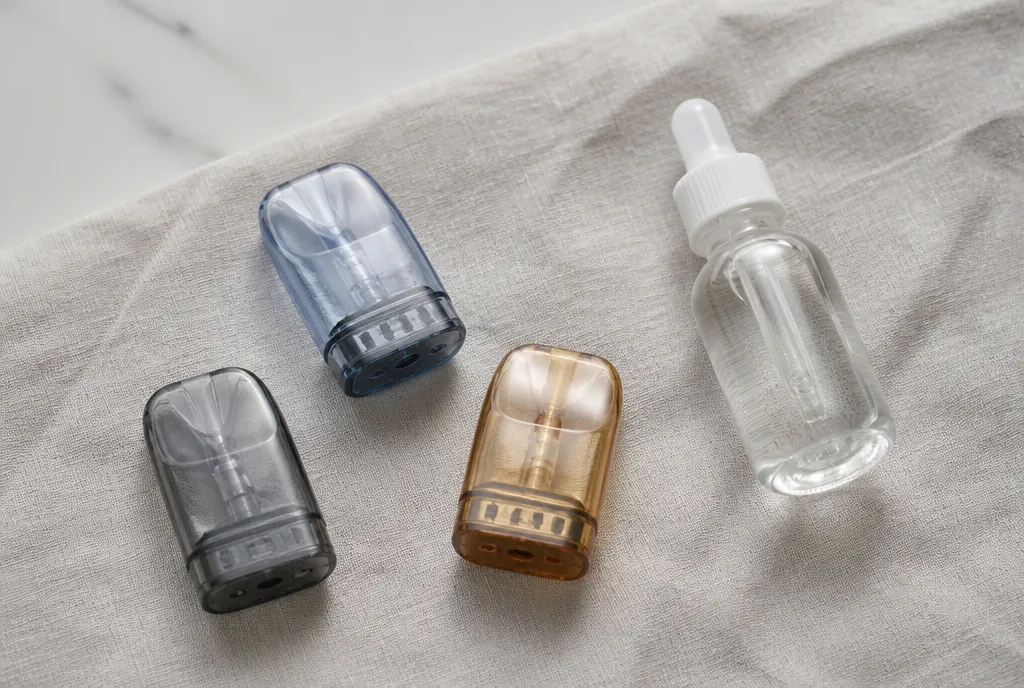
Aspire Pixo Max, matching the draw to the right pod
Aspire Pixo Max set up properly, which Pixo pod, which ECO, NOR or MAX level and how much airflow for your draw, on the 2 ml TPD edition.
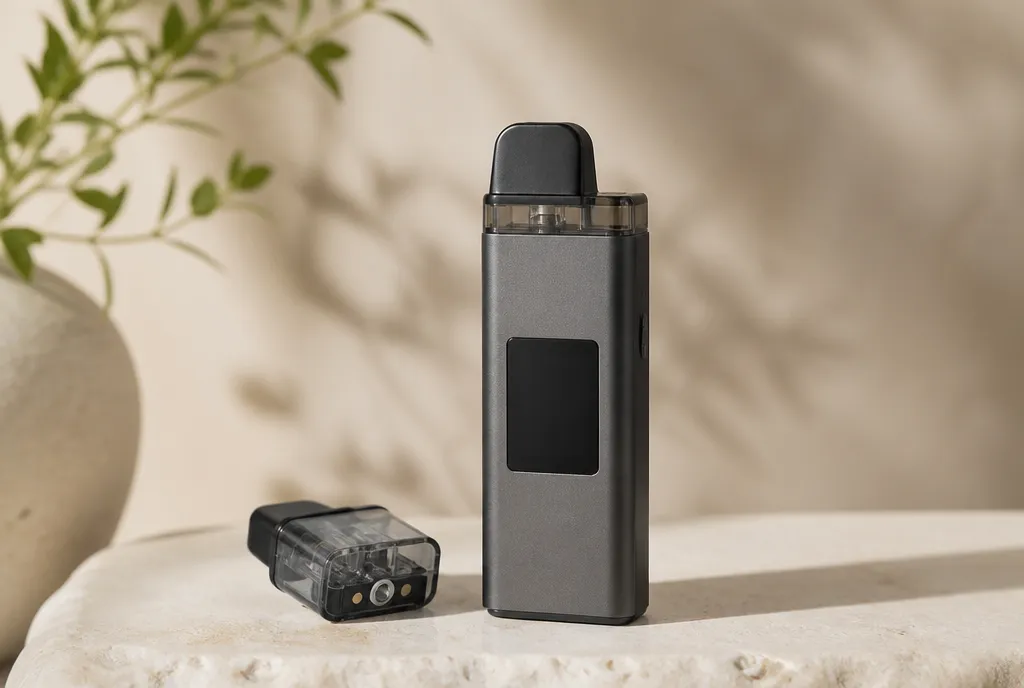
Vaporesso Luxe XR Max 2, a guide to its settings and coils
Vaporesso Luxe XR Max 2 set up properly, which GTX coil at which wattage, Pulse, Eco and Smart modes, the menu and the built-in protections.

Temperature control vaping explained, wire by wire
Ni, Ti and SS modes, cold calibration, a sensible first setting and TCR. Temperature control vaping explained, with a wire to mode table.